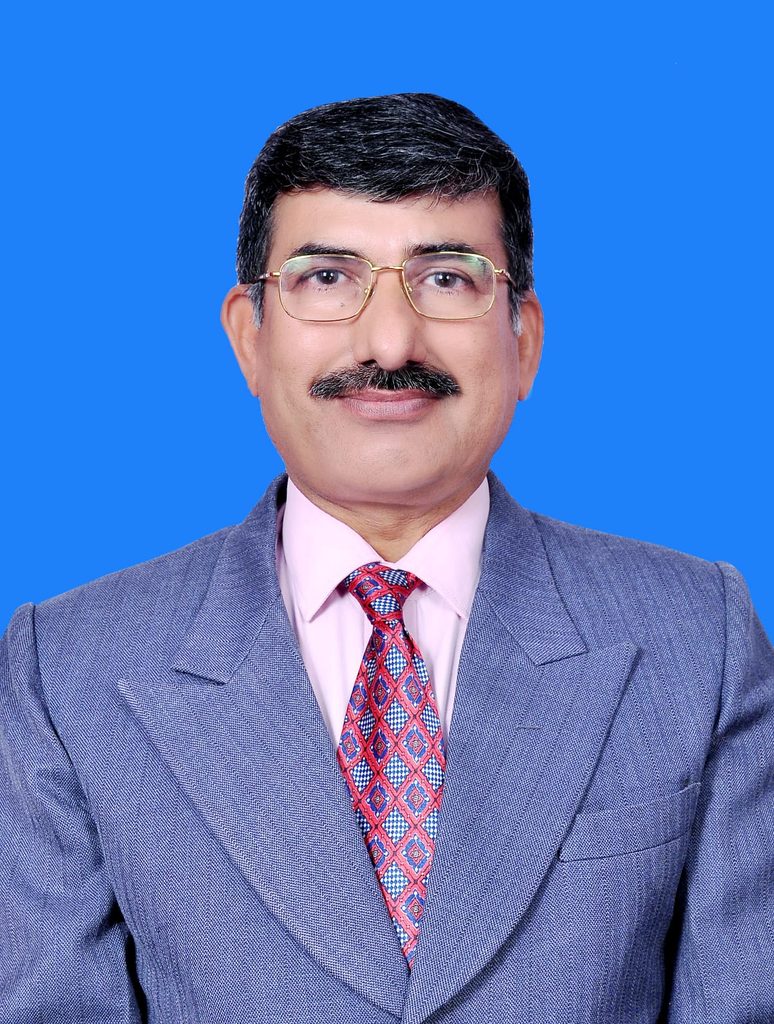
Col( Dr) Baldev Singh Manav, a retired Army officer, presently, Zila Sainik Kalyan Adhikari, Shergarh, Jodhpur, Rajasthan. An educationist, Columnist, environmentalist, social worker and an international transformative motivational speaker
When ideas enter the cockpit, humanity must secure the mind before it secures the weapons
“Since wars begin in the minds of men, it is in the minds of men that the defences of peace must be constructed.”
— Preamble, Constitution of UNESCO
The recent incident aboard Flydubai Flight FZ1073 has once again forced the world to confront an uncomfortable question: Is the greatest danger to humanity found only in weapons, missiles and battlefields—or also in the poisoned ideas that can turn one human being against another?
On 30 September 2026, Flight FZ1073, travelling from Dubai to Tel Aviv, experienced a violent incident inside the cockpit. The aircraft suffered a dramatic loss of altitude and was eventually diverted safely to Tabuk, Saudi Arabia. Passengers and other qualified pilots on board played a crucial role in preventing a possible catastrophe. Investigations into the circumstances and motive remain ongoing. Therefore, it would be irresponsible to attribute the incident collectively to any religion, community or civilization before the facts are conclusively established.
Yet the incident raises a question far larger than aviation security:
What happens when a person’s ideological identity becomes more important than the value of another human life?
Human beings first; identities come later
Nature does not stamp a religion, caste, nationality, region or political ideology on a child at birth.
A child is born human first.
The other identities come later.
We may become Hindu, Muslim, Christian, Sikh, Buddhist, Jewish or followers of another faith. We may become Indian, American, African, Arab, European or belong to any other nationality. We may acquire linguistic, regional, cultural and political identities.
But beneath all these identities is one fundamental reality:
We are human beings.
This is why I consciously use the word “MANAV” with my name.
Manav means human being.
For me, it is not merely a title. It is a reminder that humanity must remain above every secondary identity.
The Indian civilizational answer: Vasudhaiva Kutumbakam
One of the most profound contributions of Indian civilization is the idea that diversity need not lead to hostility.
The Maha Upanishad declares:
अयं निजः परो वेति गणना लघुचेतसाम्।
उदारचरितानां तु वसुधैव कुटुम्बकम्॥
“This is mine and that is yours”—such thinking belongs to narrow minds; for the broad-hearted, the whole world is one family.
The Isha Upanishad begins with another profound vision:
ईशावास्यमिदं सर्वं यत्किञ्च जगत्यां जगत्।
तेन त्यक्तेन भुञ्जीथा मा गृधः कस्यस्विद्धनम्॥
The verse reminds us of the sacredness of the whole world and warns against greed and unjust possession.
The Bhagavad Gita goes further:
सर्वभूतस्थमात्मानं सर्वभूतानि चात्मनि।
ईक्षते योगयुक्तात्मा सर्वत्र समदर्शनः॥
(Bhagavad Gita 6.29)
The spiritually awakened person sees the Self in all beings and all beings in the Self.
And the traditional Indian prayer says:
सर्वे भवन्तु सुखिनः।
सर्वे सन्तु निरामयाः।
सर्वे भद्राणि पश्यन्तु।
मा कश्चिद् दुःखभाग्भवेत्॥
May all be happy. May all be free from illness. May all see what is auspicious. May no one suffer.
This is not a prayer for the victory of one community.
It is a prayer for the welfare of all.
Vivekananda’s message to the world
In 1893, at the World’s Parliament of Religions in Chicago, Swami Vivekananda began his historic address with the words:
“Sisters and Brothers of America.”
The audience responded with prolonged applause. His message emphasized tolerance and universal acceptance.
His message was remarkable because he did not present religious diversity as a threat. He presented it as an opportunity for humanity to learn from one another.
More than a century later, the world must ask:
Have we really learned that lesson?
If religion teaches compassion, love, forgiveness and self-discipline, how can hatred committed in the name of religion represent the triumph of religion?
If nationalism exists to protect people, when does nationalism become dangerous to humanity?
If civilization is supposed to make human beings more humane, why should civilization become an excuse for human beings to destroy one another?
The Dalai Lama’s message
The Dalai Lama has repeatedly emphasized that human beings are fundamentally alike and that conflict often arises from the mental division between “us” and “them.” He has also described India as an example of religious plurality and coexistence, emphasizing compassion, tolerance, forgiveness and respect among religious traditions.
This is precisely the mindset the world needs today.
Education must become an architecture of peace
If we genuinely want to protect future generations, military and technological security alone will not be enough.
We must secure the human mind.
Schools, universities and religious institutions must not teach children that people of another faith are enemies, that disagreement is treason, or that one’s own belief gives one the right to humiliate another human being.
They must learn a simple truth:
Disagreement is not enmity.
Nature itself teaches us diversity. No two human beings are exactly alike. Even identical twins born seconds apart are not identical in personality, thought and temperament.
Then how can seven or eight billion human beings be expected to think alike?
Difference is a law of nature.
Accepting difference is civilization.
Violence against difference is barbarism.
A question to world leaders and religious leaders
I would like to ask political leaders, religious leaders, educators and intellectuals across the world:
If we poison the minds of children with hatred, where will peace come from?
If every nation places its narrow interest above humanity, who will solve global problems?
If religious identity becomes more important than human life, what will human life be worth?
If civilizations seek superiority through the destruction of other civilizations, who will remain to celebrate victory?
If the ancient principle of “might is right”—jiski lathi uski bhains—becomes the operating principle of international relations, what will happen to weaker nations, poorer communities and future generations?
We need a new architecture of global governance
Humanity needs stronger and more transparent mechanisms of global governance for problems that do not respect national borders—climate change, water scarcity, pandemics, food security, energy, poverty, inequality and war.
The international system must increasingly emphasize justice, transparency, accountability and the equitable use of global resources.
Here, Mahatma Gandhi’s principle of Trusteeship deserves renewed global attention.
Gandhi argued that wealth and talent should not be treated merely as instruments of personal accumulation but as a trust to be used for the welfare of society.
If individuals can be trustees of wealth, can nations not become trustees of the Earth’s resources?
Does the ocean stop at a national border?
Does oxygen recognize a passport?
Does sunlight belong to one nation?
Does rain fall only on one religion?
Nature does not discriminate. Humanity should not either.
UNESCO understood the problem decades ago
The opening words of UNESCO’s Constitution remain astonishingly relevant:
“Since wars begin in the minds of men, it is in the minds of men that the defences of peace must be constructed.”
War begins in the mind long before the first missile is launched.
First comes the thought:
“They are our enemies.”
Then comes hatred.
Then propaganda.
Then weapons.
Then war.
Therefore, peace must also begin in the mind.
Education and culture must become instruments for developing empathy, critical thinking, respect for difference and the ability to disagree without hatred. UNESCO’s founding philosophy explicitly connected lasting peace with intellectual and moral solidarity among humanity.
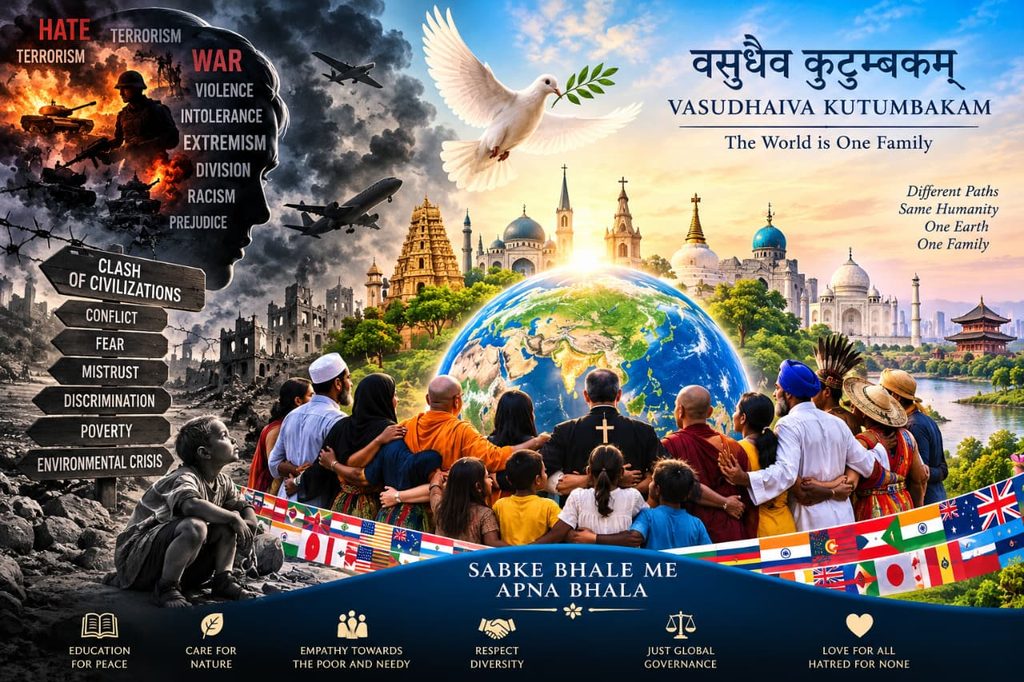
From Clash of Civilizations to Dialogue of Civilizations
Samuel Huntington’s thesis warned about the possibility of a Clash of Civilizations.
Perhaps humanity’s task now is to create its opposite:
A Dialogue of Civilizations.
A world where Hindu, Muslim, Christian, Sikh, Buddhist, Jain, Jewish, Zoroastrian and other traditions do not compete for the destruction of one another, but learn from one another.
A world where believers and non-believers enjoy equal human dignity.
A world where nations protect their legitimate interests without forgetting the larger interests of humanity.
A world where disagreement is accepted as a natural part of democracy.
A world where education produces not merely employable citizens, but peaceful human beings.
And a world where strength means protecting the vulnerable rather than dominating them.
The final question: Who will win—the civilization or humanity?
The final findings of the FZ1073 investigation must determine what actually happened and why. But the larger question raised by the incident does not need to wait for an investigation.
We must decide what kind of world we want.
Do we want a world in which religion, caste, region, nationality and ideology stand above human life?
Or do we want a world in which people proudly retain their individual and cultural identities while placing humanity above all identities?
My answer is clear:
Human first.
Identity later.
Life first.
Ideology later.
Compassion first.
Differences later.
And ultimately:
Vasudhaiva Kutumbakam — the entire world is one family.
If this principle becomes part of our schools, universities, religious institutions, parliaments and international organizations, Huntington’s “Clash of Civilizations” need not become humanity’s destiny.
We can write a different chapter:
Not Clash of Civilizations—Civilizations for Humanity.
Because ultimately, the question is not:
Which religion will win?
Which nation will win?
Which civilization will prove superior?
The real question is:
Will humanity win?
And if humanity wins, it will be a victory—
of compassion over hatred,
of peace over violence,
of coexistence over intolerance,
of unity over division,
and of life over destruction.
That should be the true measure of a great civilization.
— Col (Dr) Baldev Singh “Manav”