Gender equality is no longer just a slogan; it has become one of the central moral questions of
our time. Around the world, governments, organizations, and ordinary citizens recognize that
women and girls must have the same rights and opportunities as men. Yet, for all the speeches,
campaigns, and policies, this promise remains incomplete. We speak of fairness and dignity, but
in practice, deep inequalities continue to shape lives in classrooms, workplaces, homes, and
streets.
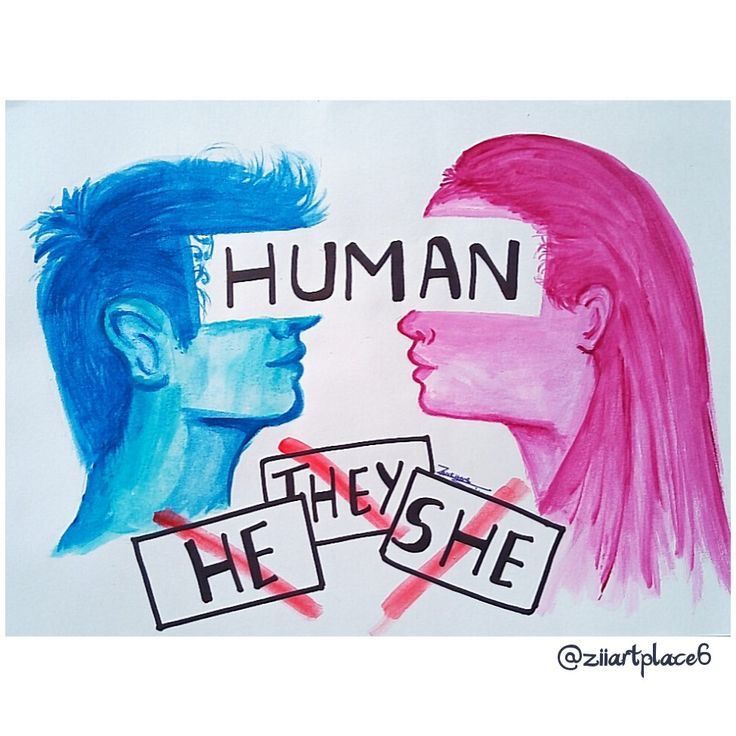
The roots of gender inequality run deep. They are stitched into centuries‑old traditions, religious
interpretations, and social hierarchies that often place men at the centre of power. In many
societies, women are still expected to be caregivers first and individuals second. Domestic work,
childcare, and emotional labour are rarely valued like paid work, though they form the backbone
of every family and community. These invisible burdens quietly limit women’s time, mobility, and
freedom to pursue education, careers, or even rest.
In theory, laws and international agreements have moved ahead of these attitudes. The United
Nations Sustainable Development Agenda, for instance, clearly states that by 2030, countries
should end discrimination against women and girls everywhere. Declarations and platforms
adopted in places like Beijing and New York have promised equal rights, equal pay, and equal
protection. Yet, on the ground, the reality is that many countries still have laws that restrict
women’s mobility, property ownership, or right to work in certain sectors. Even where the law is
equitable on paper, enforcement is often weak or selective.
The workplace is one of the most visible sites where this gap between promise and practice
unfolds. Women are more educated today than ever before, yet they remain underrepresented
in leadership, boardrooms, and high‑earning professions. On average, they still earn less than
men for the same work, and they are more likely to be pushed into informal, low‑paid, and
insecure jobs. Beyond income, they also face harassment, bias in promotions, and the
assumption that motherhood will inevitably reduce their commitment to a job. These invisible
barriers make “equal opportunity” feel like a mirage for many women.
In politics, the situation is similar. Women make up about half the world’s population, yet their
share of parliamentary seats and ministerial positions hovers far below that. In many countries,
women politicians are judged more on their appearance, marital status, or tone of voice than on
their policies or competence. When women try to break into power, they are often met with
sharper criticism, online abuse, and even threats. This hostile environment convinces many
women to stay out of politics altogether, feeding a self‑perpetuating cycle in which
decision‑making remains dominated by men.
Violence against women and girls remains one of the most brutal and stubborn aspects of
gender inequality. Domestic violence, sexual assault, harassment in public spaces, and online
abuse are not isolated incidents; they are patterns that reflect a culture in which women’s bodies
and choices are not fully respected. Even in countries with strong laws, many women still do not
report abuse because of stigma, fear of retaliation, or lack of trust in institutions. Until safety and
dignity are guaranteed for women in every corner of society, the promise of equality will ring
hollow.
The situation is particularly harsh for women who belong to marginalized communities—those
who are poor, from lower castes or ethnic groups, living with disabilities, or from sexual and
gender minorities. For them, gender inequality is multiplied by other forms of discrimination.
They are often the last to benefit from progress, whether in education, healthcare, or social
protection. When policies are designed in a one‑size‑fits‑all way, these women slip through the
cracks, reinforcing the idea that gender equality is a luxury for the relatively privileged.
Yet, there is also hope. In recent decades, women’s movements, youth activism, and advocacy
by civil society have pushed the needle forward. Child marriage has declined in many regions,
maternal mortality has come down, and more girls are reaching higher education. In some
countries, women have broken through glass ceilings in politics, science, sports, and the arts,
becoming powerful symbols of what is possible. Each time a woman is elected to office,
becomes a CEO, or simply refuses to accept harassment, she contributes to rewriting the script
of what a woman can be.
Keeping the promise of gender equality, therefore, is not about starting from scratch; it is about
turning visible progress into irreversible change. It means investing in early‑childhood education
that teaches boys and girls to respect each other, ensuring that workplaces are truly safe and
fair, and creating support systems—like affordable childcare and parental leave—that allow both
men and women to balance work and family. It also means challenging language, media
portrayals, and everyday jokes that normalize sexism, because culture is as powerful as law.
Ultimately, gender equality is not a gift to women; it is a transformation that benefits everyone.
When women can walk safely at night, when they are paid fairly, when they can speak without
fear of ridicule, societies become more just, more creative, and more resilient. We are still
learning to keep this promise because it requires humility, patience, and a willingness to
confront uncomfortable truths. But if we take it seriously—not as a checkbox on a policy list, but
as a living commitment in our homes, schools, and workplaces—equality can move from a
distant dream to a shared reality.

By : khushi bhati